Storm, Wind & Hail Damage — Documented Properly
Storm damage claims are won or lost on documentation, not on argument. We photograph, measure, and itemize so that what's actually on your roof is what gets evaluated. What we will never do is promise you an outcome your insurance company controls.
What Hail Damage Actually Looks Like
Hail knocks the protective granules off asphalt shingles, exposing the asphalt mat to UV. Once that happens the shingle ages dramatically faster. Hail can also bruise the mat — a soft spot you can feel but often can't see — which becomes a failure point later.
None of this is visible from your driveway. That's why homeowners are so often told their roof is fine after a hail event, and why the damage surfaces after the claim window has closed.
We document hail with measured impact counts per test square, across multiple test squares, on every slope. "Some hail damage" is an opinion. "Eleven impacts per test square across four test squares on all four slopes" is evidence.
Wind Damage Is Even Easier to Miss
Wind doesn't have to remove a shingle to damage your roof. It can break the factory sealant bond so the shingle lies flat but is no longer watertight — an unsealed shingle looks completely normal from the ground and will leak in the next driving rain.
Wind also creases shingles along ridges and rakes. A crease is a fracture line in the mat. It will fail; it just hasn't yet.
Where We Stand on Insurance — Read This
We will help you document damage, understand your adjuster's scope, identify commonly omitted line items, and file a supplement when the approved amount doesn't cover a correct installation.
We will not promise that your insurance company will approve anything. That decision belongs to your carrier, and any contractor who guarantees an approval is telling you something they cannot know.
We will also never offer to cover, waive, or absorb your deductible. That is insurance fraud, it makes you a participant, and it can void your policy. If a contractor offers this after a storm, that's your answer about how they do business — walk away.
About the Knock on Your Door
After major hail, out-of-area crews canvass Central Indiana neighborhoods hard. Some are legitimate. Many use the cheapest available materials, subcontract to whoever bid lowest, and are gone before the first leak.
Ask anyone who knocks for a local physical address, current proof of insurance, and how long they've operated here under the same name. We're at 8631 Zephyr Dr, Indianapolis, IN 46217 — and we'll still answer the phone in three years.
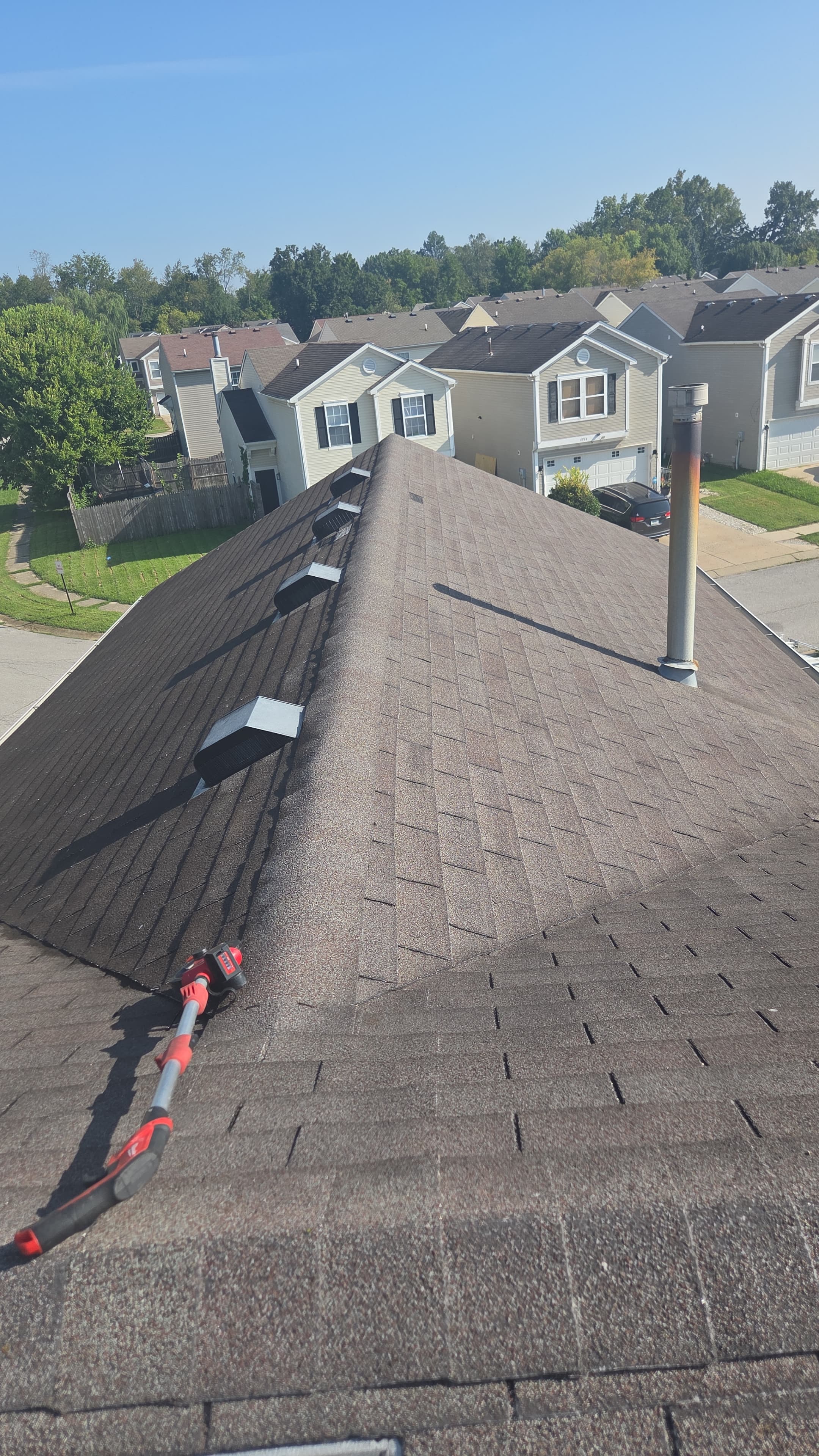
What We Document After a Storm
Dated, measured, and clear enough for a carrier to act on. You keep the entire file.
Straight Answers
How long do I have to file a storm damage claim?
Most policies limit how long you have after a date of loss — often 12 months, sometimes less. Check your policy today rather than assuming. Homeowners who wait until a ceiling stain appears two years later frequently discover the window has closed and there's no coverage left.
Should I file a claim before or after an inspection?
Get inspected first, so you know whether you actually have damage worth filing on. Filing a claim that gets denied still shows on your record. We'll tell you honestly whether what we found is likely to support a claim.
Will you meet with my insurance adjuster?
Yes. We'll be there, walk the roof with them, and make sure what we documented is what gets looked at. Adjusters carry heavy caseloads and their software works from templates — having someone present who knows the roof matters.
What if the adjuster's estimate is too low to do the job right?
That's common and it's not a fight — it's a supplement, which is a routine part of the claims process. Adjuster software regularly omits drip edge, ice and water shield, code upgrades, ventilation, and detached structures. We document what's missing and why it's necessary, and submit it.
Do I have to use the contractor my insurance recommends?
No. You choose your own contractor. Your carrier may suggest a preferred vendor, but the decision is yours.
What should I do immediately after a storm?
Photograph everything before you clean up — roof, gutters, siding, screens, and any hail on the ground with a coin next to it for scale. Do temporary mitigation only, like tarping, and keep every receipt since that's usually reimbursable under your policy's loss mitigation clause. Don't let anyone begin permanent repairs before the adjuster has inspected.
Our Other Services
Free Roof Inspection
Always Free · No Obligation
Roof Replacement
Complete Owens Corning Systems
Roof Repair
Real Repairs, Not Roofing Cement
Residential Roofing
Asphalt Shingle Specialists
Gutters, Soffit & Fascia
The Rest of What the Storm Hit
Siding Repair
Exterior Repair & Storm Restoration
Commercial Roofing
Apartments, churches, light commercial
Emergency Roof Repair
We show up. Even on Sundays.
Storm, Wind & Hail Damage Across Central Indiana
We provide storm, wind & hail damage throughout Indianapolis and the surrounding communities.
Free Storm & Hail Damage Inspection & Estimate
We'll climb your roof, document everything we find, and give you an itemized written estimate that never expires. And if you don't need the work, we'll tell you that instead.
Licensed · Bonded · Insured · Owens Corning Preferred Contractor